NITE

Nonnenmann Group · UMass Amherst

Cooking functional interfaces
&
Looking at them work.

Research

Highly responsive nanostructured materials.

01 · How we cook

We engineer active surfaces & interfaces.

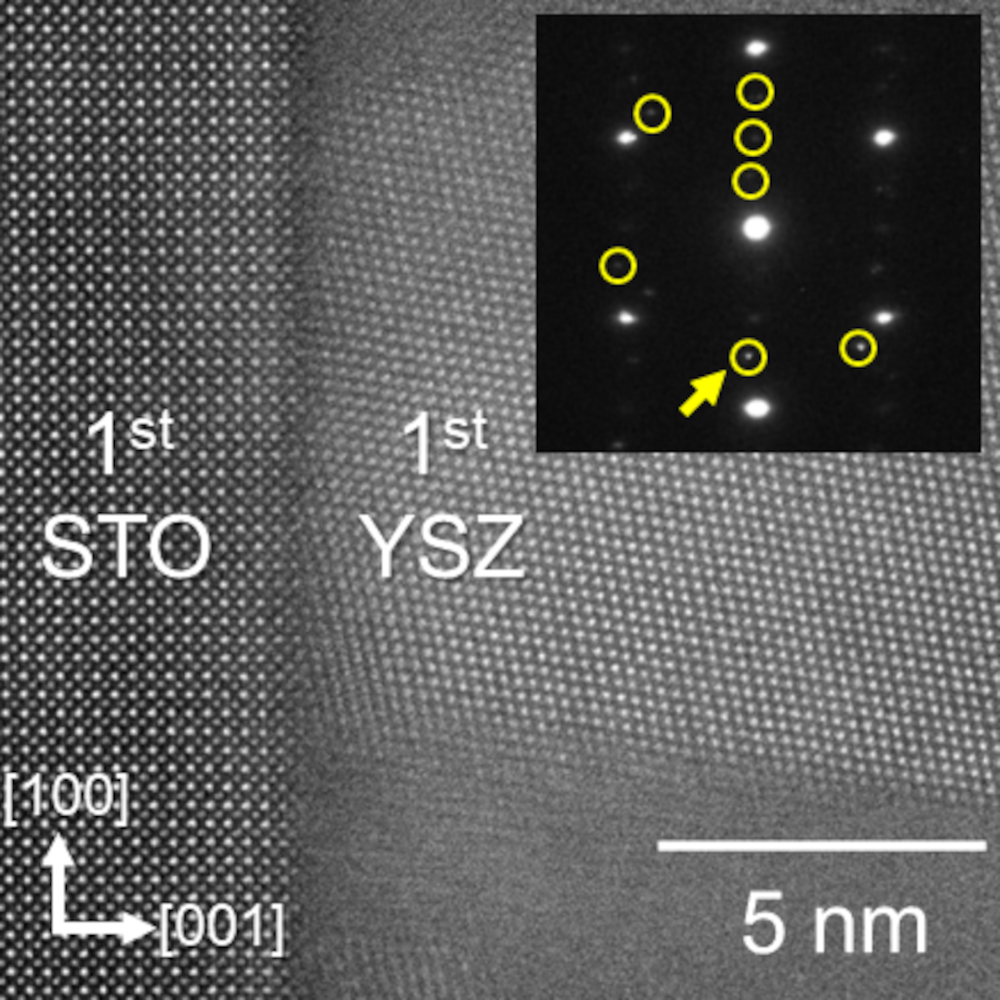
Our work centers on materials systems where the active behavior lives in the defect structure, not the bulk composition. In complex oxide electrodes and electrolytes, oxygen vacancies are the working species. We apply semiconductor space-charge theory to STO/YSZ heterointerface films to predict vacancy distributions next to plasma-plume-reduced substrates, and extend the framework into compositionally graded GDC/YSZ designed to push the active vacancy population toward the electrolyte interface in solid oxide cells.

Vacancies do the same work in a different geometry in memristive systems, where we span both filamentary switching, with local vacancy accumulations bridging electrodes, and interfacial switching, with vacancy redistribution at oxide heterointerfaces gating the current. Solution-processed nanocrystal assemblies of SrTiO3, HfO2, BaZrO3, and SrZrO3 give us compositional control vacuum deposition cannot. We also build nanocomposites around naturally flexible Geobacter sulfurreducens pili as conductive protein nanowire fillers, getting conductivity at low fill fractions without the matrix stiffening that rigid CNT and metallic nanowire fillers force on soft electronics.

These methods translate into collaborative work on electroactive ceramics in solid-state ionics, memristive arrays from solution-deposited inks and blade-assisted nanostructure films, and a long-running collaboration on cold spray metal deposition at refractory interfaces.

illustrative

Atomic-resolution HAADF image of the first STO / first YSZ heterointerface with SAED inset.

STO / YSZ heterointerface · HAADF
02 · How we look

Observing real-time functionality.

Scanning probe microscopy is our measurement platform, run across the environments these materials operate in. Base contact, tapping mode, bimodal AM-FM imaging for elastic modulus and energy dissipation alongside topography, and fast force mapping with advanced processing for quantitative nanomechanics. For subsurface electrical behavior we use a nanoscalpel approach: sequential layer removal with conductive-tip I-V mapping through the film cross section.

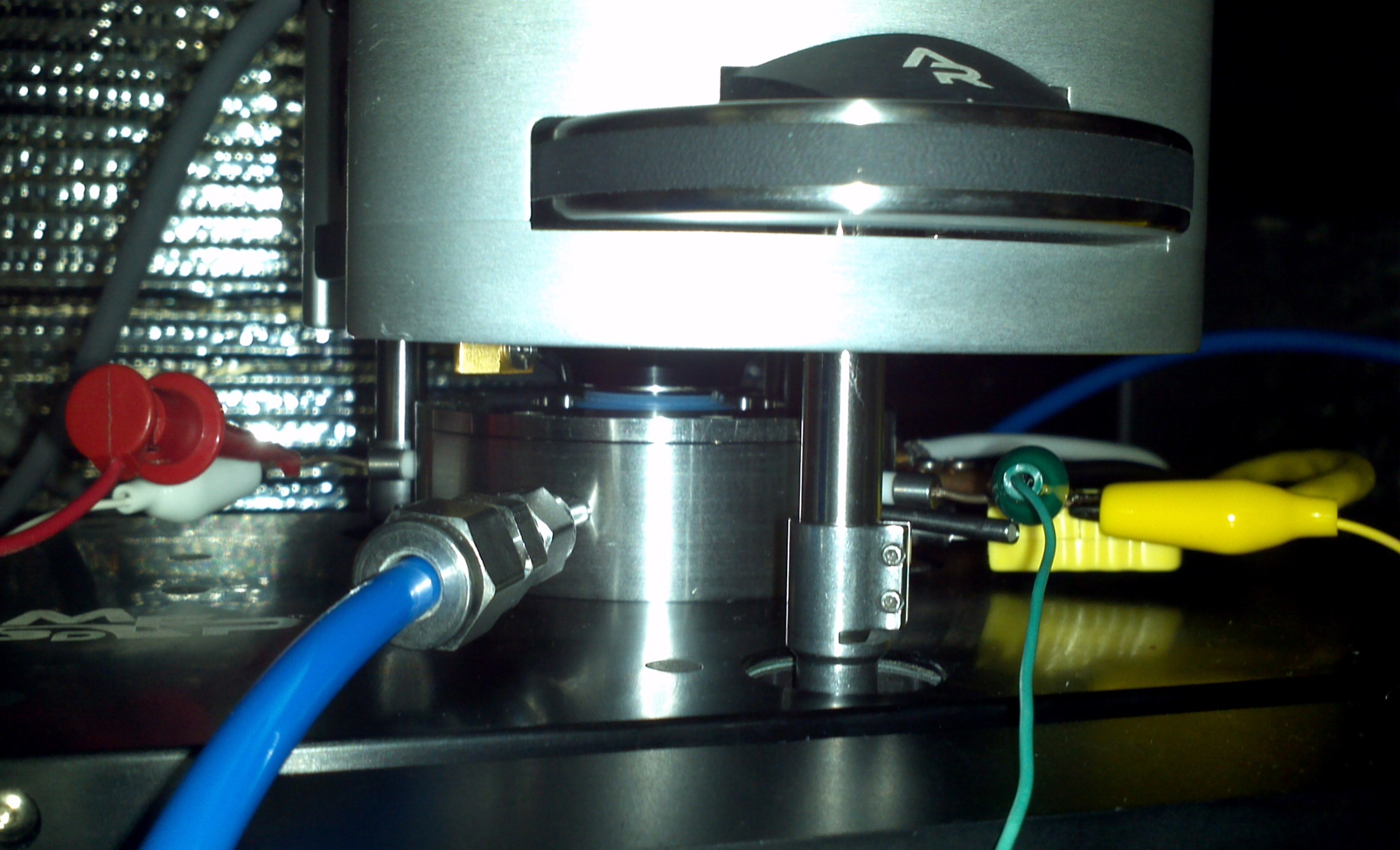
Environment is part of the measurement. Custom high-temperature chambers above 500 °C let us watch vacancy redistribution and electrode potential evolution while a solid oxide cell operates. Fluid-cell imaging preserves hydrogels and biological surfaces in their native state. The platform covers materials as soft as a Geobacter pilus and as hard as a cold-sprayed refractory metal interface.

Dynamic processes require dynamic measurement. Characterizing a material after it has switched, cooled, or come out of electrolyte tells you what it looked like at rest. Observing function means measuring while it's happening.

What comes next is more compositionally and structurally complex than what defined the last decade. Advanced alloys, high entropy ceramics, quantum sensing films, and architectures for neuromorphic and quantum information sit in design spaces too large for empirical search alone. These spaces will feed a new intelligence era, and they require its input to be made practical. We look forward to what comes next.

The lab's in-situ AFM environmental chamber, wired for operando measurements: AFM scan head, cantilever holder, oxygen inlet, electrical feedthroughs, heater power, and thermocouple. AFM Scan Head Cantilever Holder Electrical Feedthrough Oxygen Inlet Heater Power Electrical Feedthrough Thermocouple

in-situ AFM chamber

Supported by

  • National Science Foundation
  • U.S. Army Research Laboratory
  • National Center for Manufacturing Sciences

Recent

Check out our published work.

  1. Bioelectronics

    2026

    Intracellular sensing with transparent graphene–nanotube electrodes.

    X. Fan, J. Park, V. Malik, X. Zhang, H. Bao, X. Zhang, G. Srimathveeravalli, S. S. Nonnenmann, J. Ping.

    2D Materials 13, 021003 (2026). DOI ↗

    2025

    Sensing devices fabricated with E. coli expressing genetically tunable nanowires incorporated into a water-stable polymer.

    J. M. Sonawane, E. Chia, T. Ueki, J. Greener, S. S. Nonnenmann, J. Yao, D. R. Lovley.

    Biosensors and Bioelectronics 278, 117378. DOI ↗

  2. Solid-state electrochemistry

    2023

    Influence of Sr-site deficiency, Ca/Ba/La doping on the exsolution of Ni from SrTiO3.

    W. O'Leary, L. Giordano, J. Park, S. S. Nonnenmann, Y. Shao-Horn, J. L. M. Rupp.

    J. Am. Chem. Soc. 145, 13768–13779 (2023). DOI ↗

  3. Mechanics & manufacturing

    2026

    Development of high-flexural-strength titanium/hydroxyapatite biocomposites via cold-spray deposition with titanium and niobium bond coats.

    F. Andami, Prateek, E. Chia, S. S. Nonnenmann, D. Jafarlou, J. J. Watkins.

    ACS Biomaterials Science & Engineering 12, 679–688 (2026). DOI ↗

  4. Memristive systems

    2021

    Memristive behavior of mixed-oxide nanocrystal assemblies.

    Z. Zhou, P. Lopez-Dominguez, M. Abdullah, D. M. Barber, X. Meng, I. Van Driessche, J. D. Schiffman, A. J. Crosby, K. R. Kittilstved, J. De Roo, S. S. Nonnenmann.

    ACS Applied Materials & Interfaces 13(18), 21635–21644 (2021). DOI ↗

    2019

    Highly uniform resistive switching in HfO2 films embedded with ordered metal nano-island arrays.

    J. Wang, L. Li, H. Huyan, X. Pan, S. S. Nonnenmann.

    Advanced Functional Materials 29(25), 1808430. DOI ↗

People

Our Group.

The NITE team comprises talented, motivated individuals that thrive in advancing materials research in dynamic environments to meet broader, societal needs and goals. We routinely collaborate across all disciplines and look forward to working with you in the near future!

Principal Investigator

Stephen S. Nonnenmann

Professor, Department of Mechanical & Industrial Engineering
Member Faculty, MSE Interdisciplinary Graduate Program
Adjunct Faculty, Department of Chemical & Biomolecular Engineering

Background
  1. Postdoc, Materials Science & Engineering · University of Pennsylvania
  2. Ph.D., Materials Science & Engineering · Drexel University
  3. M.S., Materials Science & Engineering · University of Central Florida
  4. B.S., Glass Engineering Science · NYS College of Ceramics at Alfred University

ssn@umass.edu · Google Scholar · ORCID · LinkedIn

  • Jieun Park

    6th Year Ph.D. Mechanical & Industrial Engineering

    My research studies the evolution of vacancy distributions along electroactive oxide surfaces and interfaces as a function of strain, composition, and work function difference.

    Background

    Education

    M.S., Machine Design & Materials · Konkuk University (2018)

    B.S., Mechanical Engineering · Konkuk University (2016)

    Outside the lab

    [ Add interests. ]

  • Suryeon Lee

    6th Year Ph.D. Mechanical & Industrial Engineering

    Local mechanical properties and conductivity in peptide/protein nanowires within conductive elastomer nanocomposites.

    Background

    Education

    M.E., Materials Science and Engineering · Inha University (2019)

    B.S., Materials Science and Engineering · Inha University (2017)

    Outside the lab

    [ Add interests. ]

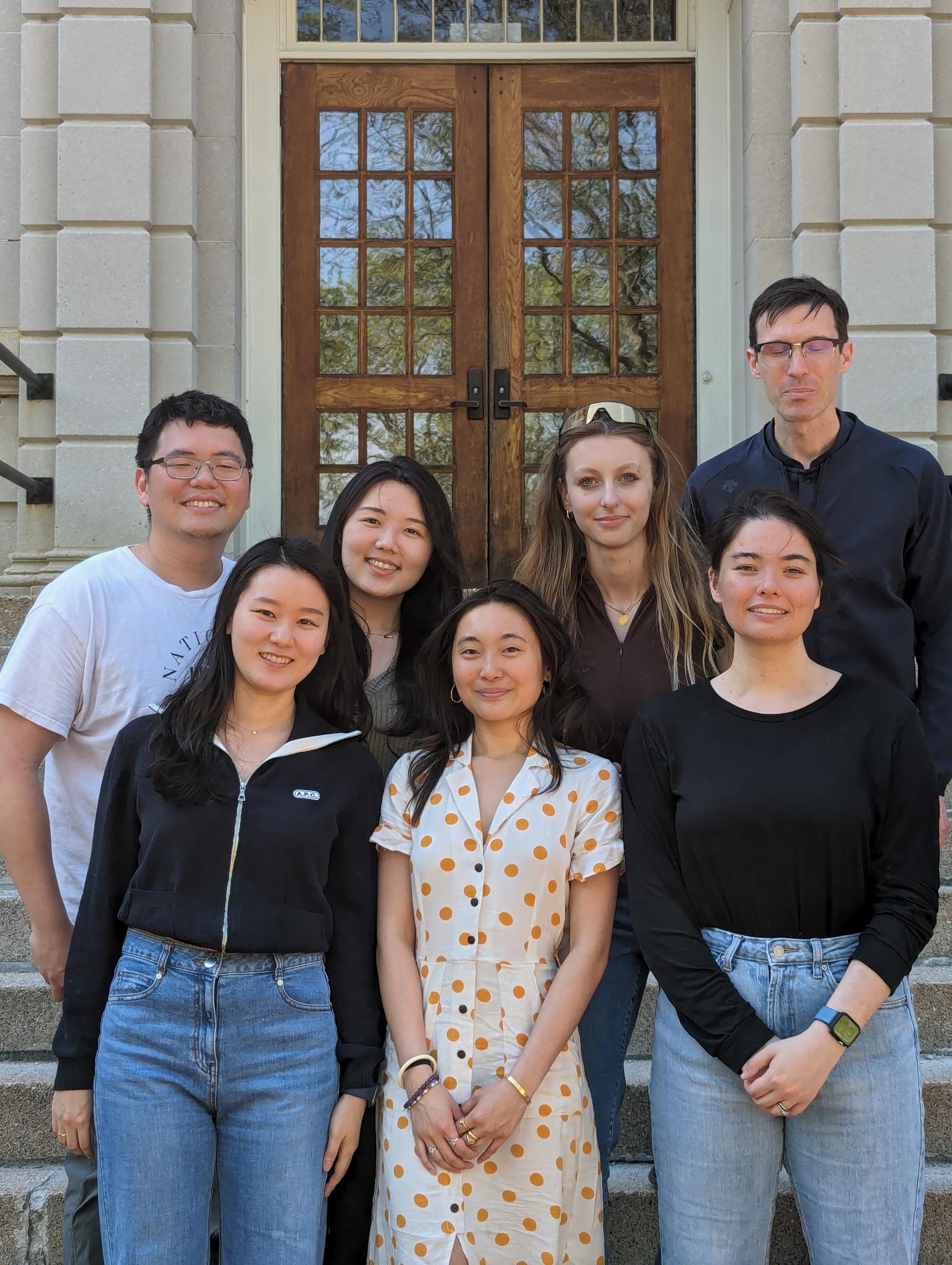
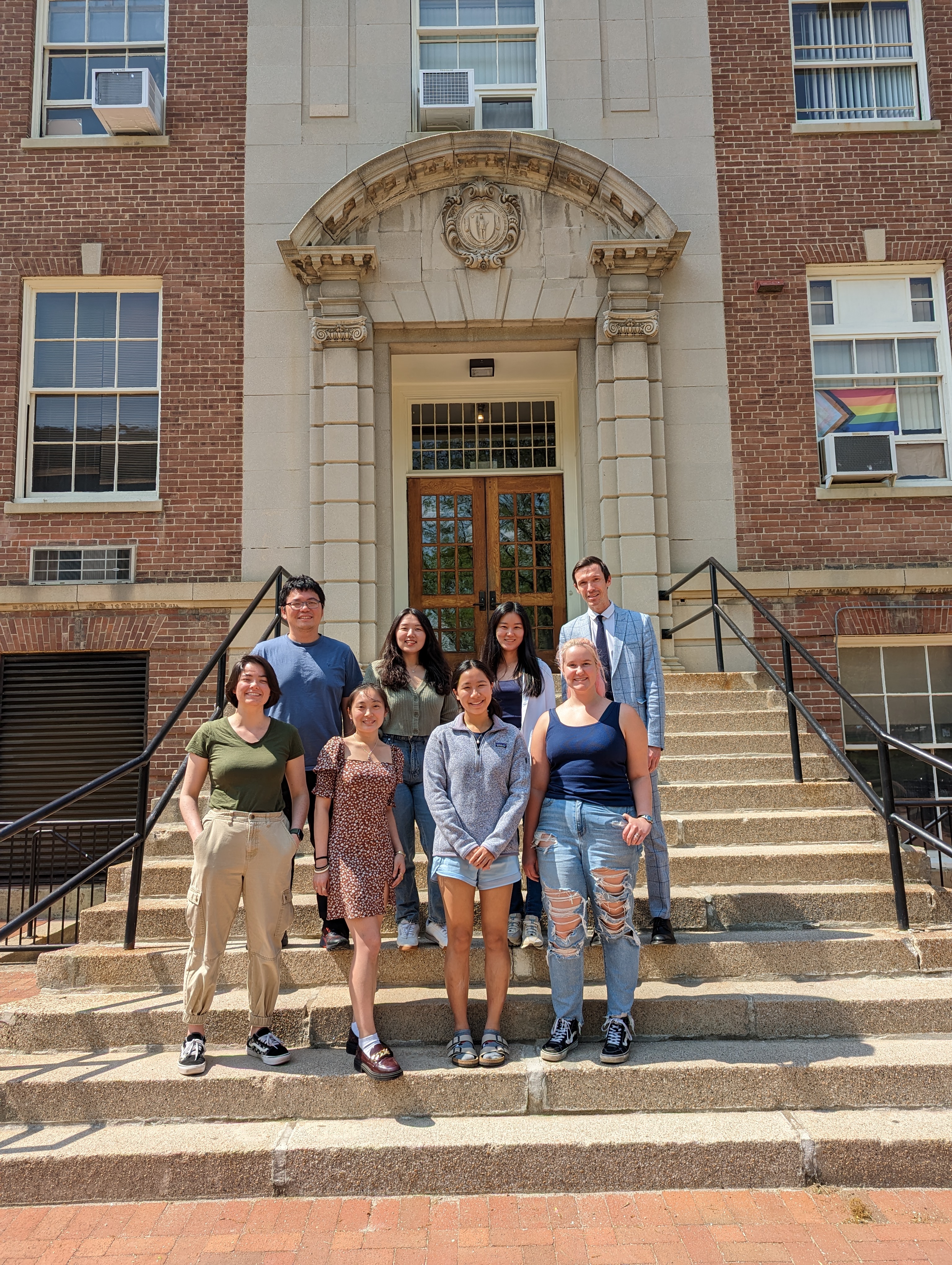
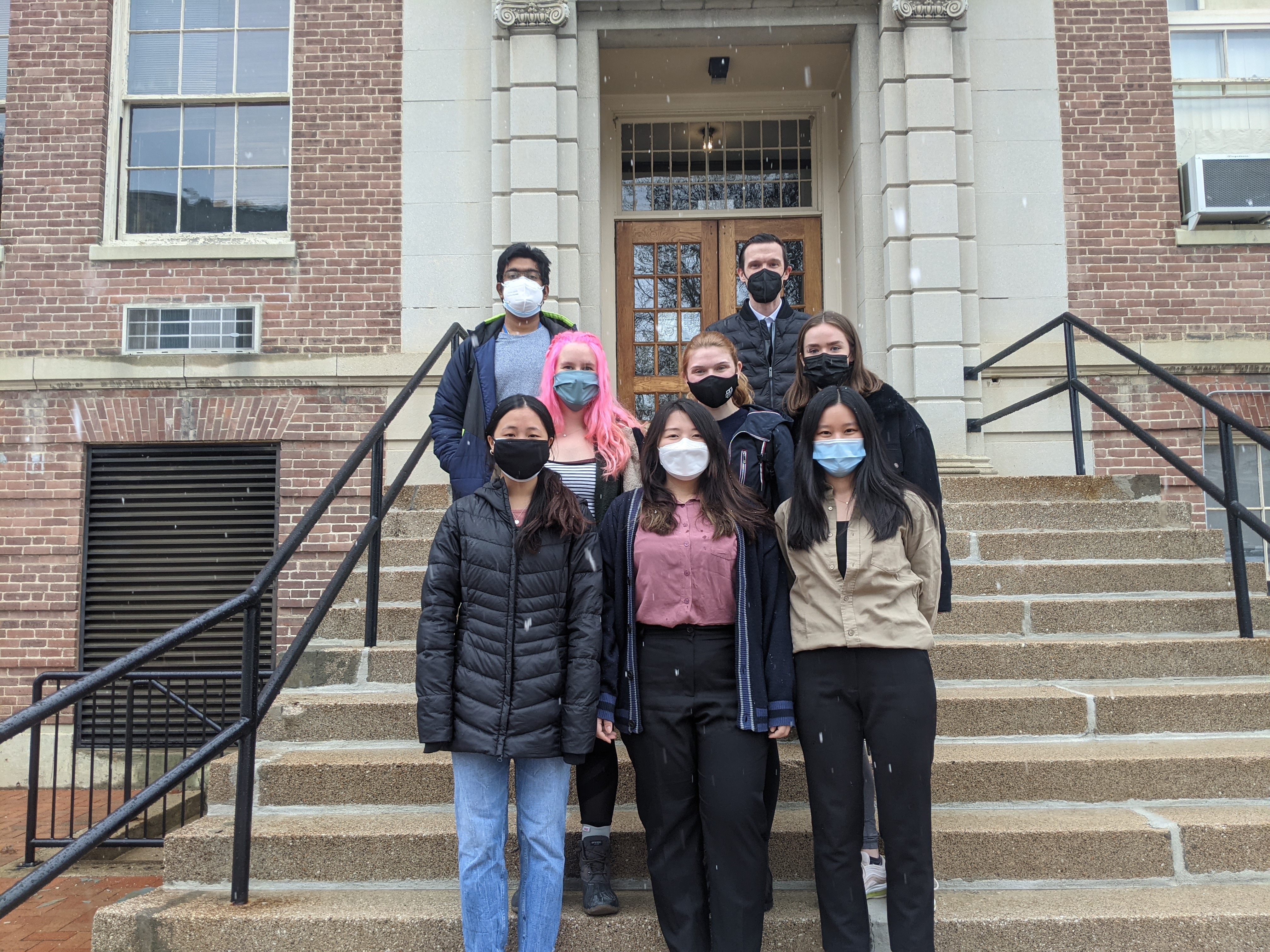
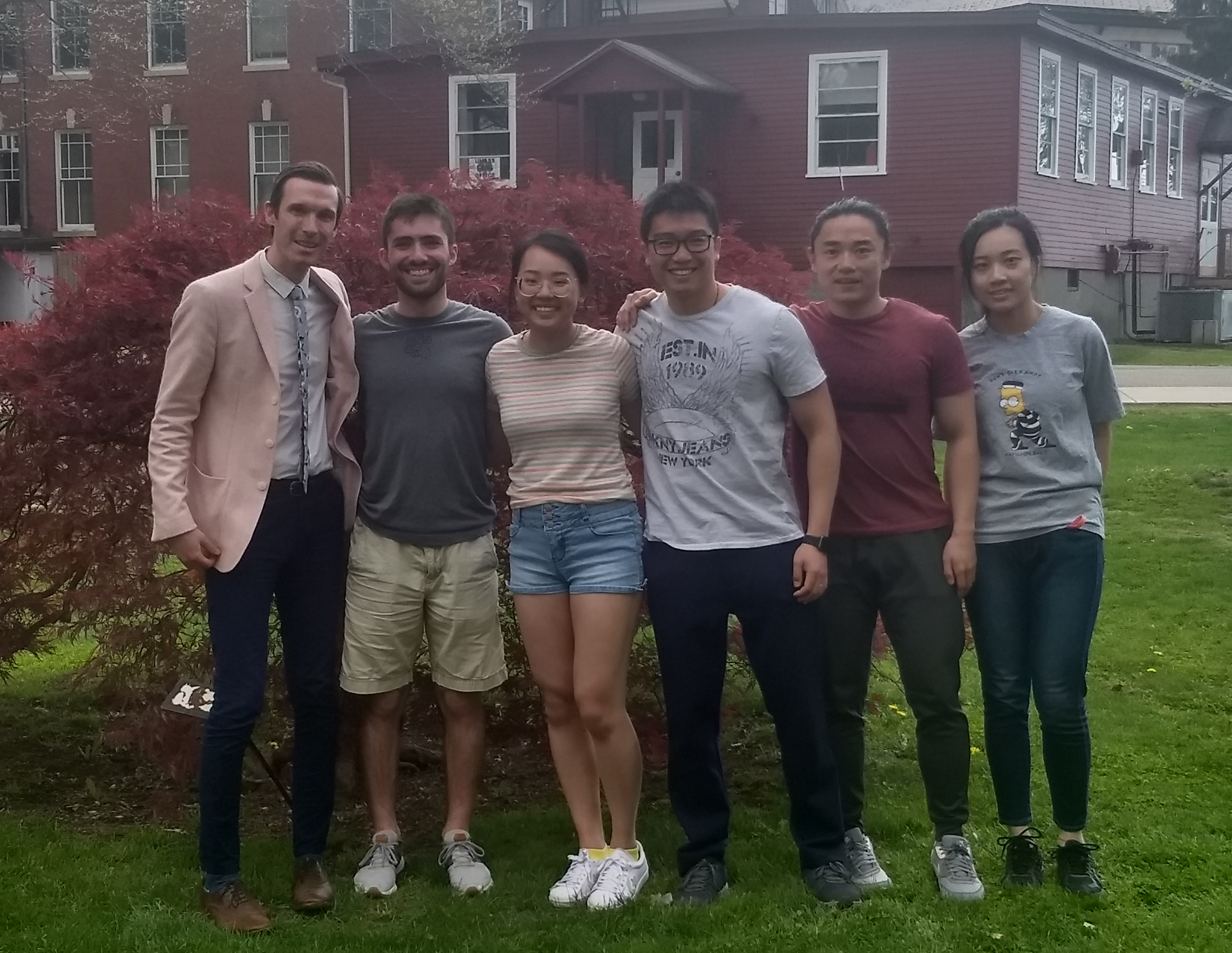
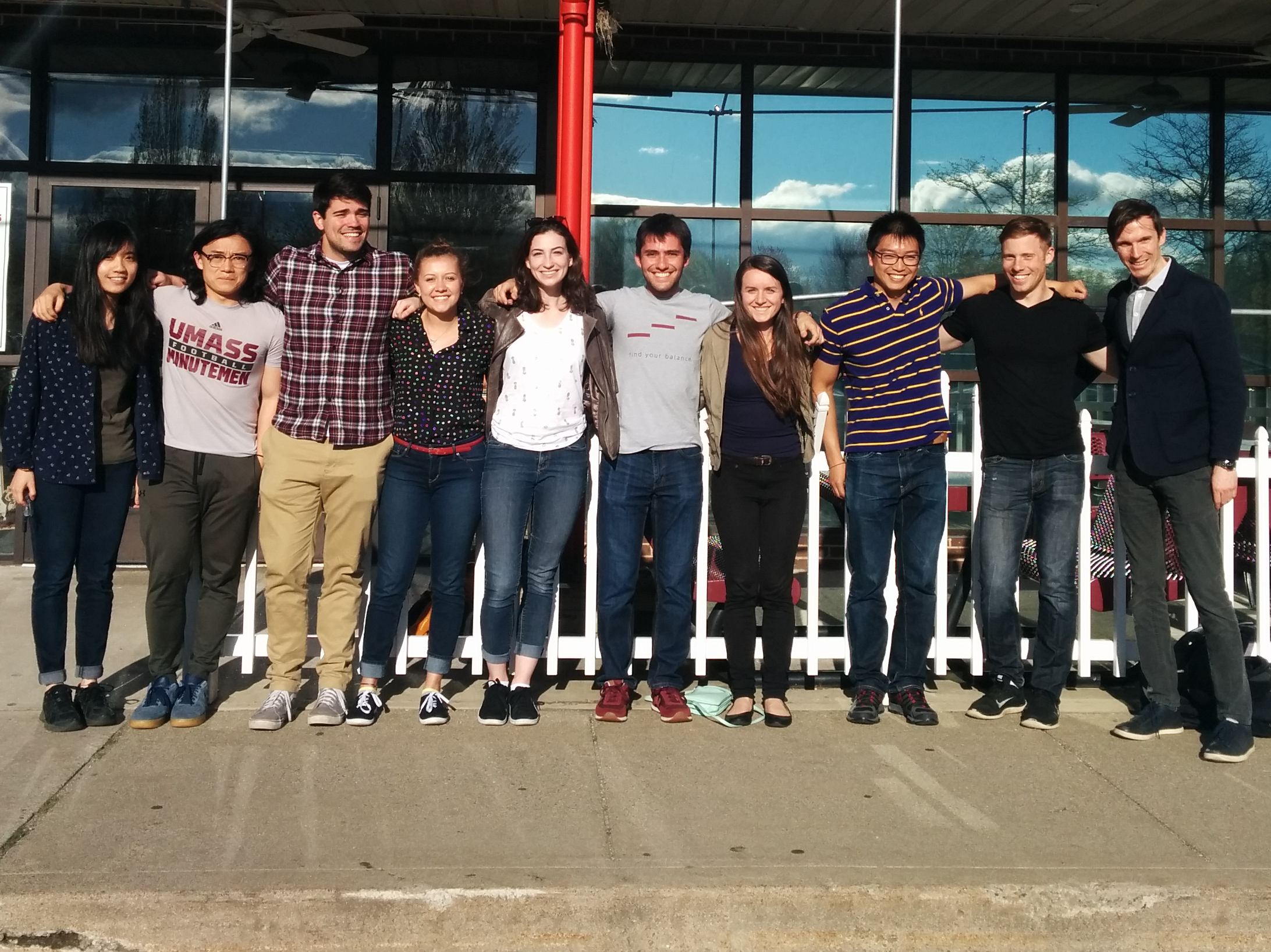
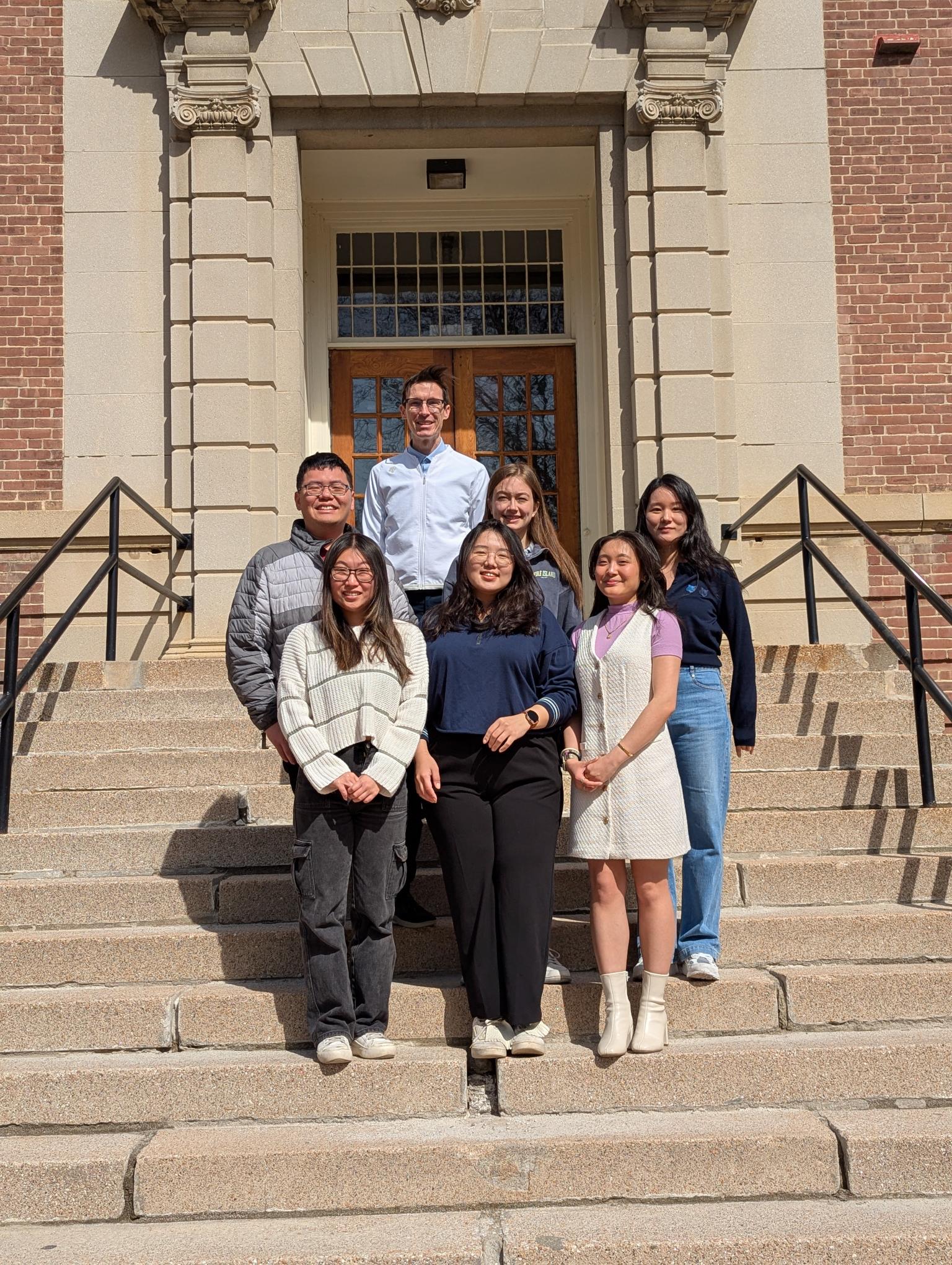
Group photos

Apply & contact

Connect with us.

Open positions

  • Graduate students. Active recruiting in nanoelectronics, polymer science, and biomaterials. Backgrounds in materials science, condensed-matter physics, nanoelectronics, and biomaterials are encouraged.
  • Undergraduates. Submit a CV and a brief statement of interest in materials research. Project availability depends on current scope.
  • Postdocs. Not actively recruiting. Inquiries regarding fellowship-funded positions are welcome.
Email Prof. Nonnenmann

Find us

Lab
28 & 30 Goessmann Laboratory
686 N. Pleasant St., Amherst, MA 01003
Office
208E ELAB I
219 ELAB I, 160 Governors Drive
Amherst, MA 01003
Phone
413.545.4051